.jpg)


Kilola & Orchestre Poly-Rythmo
.jpg)
I have no informations about Kilola. If somebody has ? Anyway this lp has been recorded in Benin in the late 70s with powerfull Poly-Rythmo and directed by Dgib's on his Sodogil label. Heavy soukous.
.jpg)

Sonny Okosun: "Papa's Land" (Nigeria/1977)

Sonny Okosun was born in 1947. He was one of the leading Nigerian musicians from the late 1970s to mid '80s. His first band, The Postmen, was formed in Enugu in 1965. In 1969 he joined Melody Maestros, a band led by Victor Uwaifo from 1972 to 1974 he led a group known as Paperback Limited and then formed a new band, Ozziddi. From then on, he released several albums either with Ozziddi, or solo recordings.
His 1977 song, "Fire in Soweto", became a major international hit. He was featured in the anti-apartheid album Sun City and his song "Highlife" was in the soundtrack of 1986 film Something Wild His mainstream success started to fade in the late 1980s, but he continued his career as a gospel musician under the name Evangelist Sonny Okosun.
He died aged 61 on 24 May 2008 at Washington DC.

T.P. Poly Rythmo: "Jolie Beauté Africaine" (1975)

Two joyfull Cavacha rhythms from Poly-Rythmo recorded in 1975. "Côte d'Ivoire Chérie" is clearly dedicated to Ivory Coast and all its beautifull towns as well as its beautifull girls: "Jolie Beauté Africaine".
Deux superbes rythmes cavacha du Poly-Rythmo composés par Clément Mélomé en 1975. "Côte d'Ivoire Chérie" est clairement dédicacé à la Côte d'Ivoire et ses jolies villes ainsi que ses "Jolies Beautés africaines".
Yedenou Adjahoui et son ensemble
.jpg)
I suppose that this LP in stereo and with a good recording sound is from the late seventies. I would love to talk Goun language because I would be able to translate the poetry and chronics from Adjahoui.
The tune "Jesu Jiji" is a pure Kakagbo rhythm. Beware of Kaka, a powerfull warrior rhythm which is played by the famous "One man-band": Sagbohan Danialou.
.jpg)
Pat Thomas (Ghana/1979)
.jpg)
Pat Thomas was Born in 1951 in Kumasi, Ghana. The wave of disco and reggae that swept Africa in the mid-70s created differing responses: some musicians pulled away from playing imported music entirely, others adopted it and adapted it to their own purposes. One of the latter category is highlife vocalist Thomas, who made his name with his band the Sweet Beans. He was brought up by his uncle, Onyina, a celebrated local band leader and the owner of a record store in Kumasi.
In 1969 he joined the Broadway Dance Band, leaving a year later to join the Uhuru Dance Band for a tour of the UK. Returning to Ghana, he played with Ebo Taylor’s Blue Monks, spent a year in the Cote D’lvoire and then formed the Sweet Beans in 1973. Like many Ghanaian bands, the Sweet Beans received sponsorship from a government body, in this case the Cocoa Marketing Board. They released False Lover in 1974, then split and re-formed as Marijata, releasing Marijata and Pat Thomas Introduces Marijata, after which Thomas released two reggae-influenced solo albums, Let’s Think It Over and Asawado.

National Jazz du Dahomey (1968)

National Jazz du Dahomey is one of the first modern band of Benin after decolonisation. This Extended Play record was released in 1968.
National Jazz du Dahomey figure parmi les premiers groupes modernes du Bénin après la décolonisation. Ce 45 tours longue version a été enregistré en 1968.

Dahomey (1952)
.jpg)
In 1952, Pierre Verger, the famous Photographer and Ethnologist, took those pictures (the sleeve too) of Egun ceremony in Benin. Egun is a mask.
A dead spirit who's coming back behind costume, music, song, dance, advices and judgments for living people. The recording is from Gilbert Rouget, the great musical ethnologist who worked during a long period in Benin.
Harmonie Voltaique (Burkina-Faso/1978)

The group was founded by Antoine Ouedraogo in I948. They were the first group created to play "modern music" in what was then the French West African colony of Upper-Volta.
These singles were composed by Henri Tabsoba who integrated the band in I966. During the sixties, the group started to perform songs in "Moore" (the language of the Mossi people).
T.P. Orchestre Poly-Rythmo: 0+0=0 (1983)

Very nice Poly-Rythmo compilation i think released after the death in 1982 of the two composers of the band, Papillon, the guitarist, and Yehouessi Leopold, the drummer. Dossou Gilbert aka Prince Dgib's produced this LP which was distributed in France.
Très bon album du Poly-Rythmo. Je pense que c'est une compilation sortie après la mort de deux figures du groupe: Papillon, le guitariste et Yehouessi Leopold, le batteur. Ils sont d’ailleurs tous les deux compositeurs de l'album qui a été produit par Dossou Gilbert alias Prince Dgib's pour une distribution française.

Professeur Bylledey (1983)
.jpg)
Wonderfull and hypnotic title "Adieu Papillon" dedicated to Papillon, the guitarist of Poly-Rythmo's band who tragically died in 1982. Bylledey Guissey was singing a lot with Poly-Rythmo before returning to traditional music and its education. Great personality.
Sublime titre traditionnel et hypnotique en hommage à Papillon, le guitariste de l'orchestre Poly-Rythmo décédé tragiquement en 1982. Bylledey Guissey a chanté de nombreuses fois avec le Poly avant de se retirer dans la musique traditionnelle et son enseignement. Grande personnalité.
%2B1.jpg)
Jean Bittard (Mali/1982)

Jean Bittard was half Lebanon half Malian. He was the son of a Lebanese father and a Malian mother from Kayes". He used to be with Sidi Yassa, the regional orchestra of Kayes.
Jean Bittard était un chanteur moitié libanais moitié Malien. Son père était libanais et sa mère malienne de Kayes. Il aurait commencé sa carrière avec l'orchestre Régional de Kayes.

Jean Bittard était un chanteur moitié libanais moitié Malien. Son père était libanais et sa mère malienne de Kayes. Il aurait commencé sa carrière avec l'orchestre Régional de Kayes.
T.P. Orchestre Poly-Rythmo & Loko Pierre (1978)
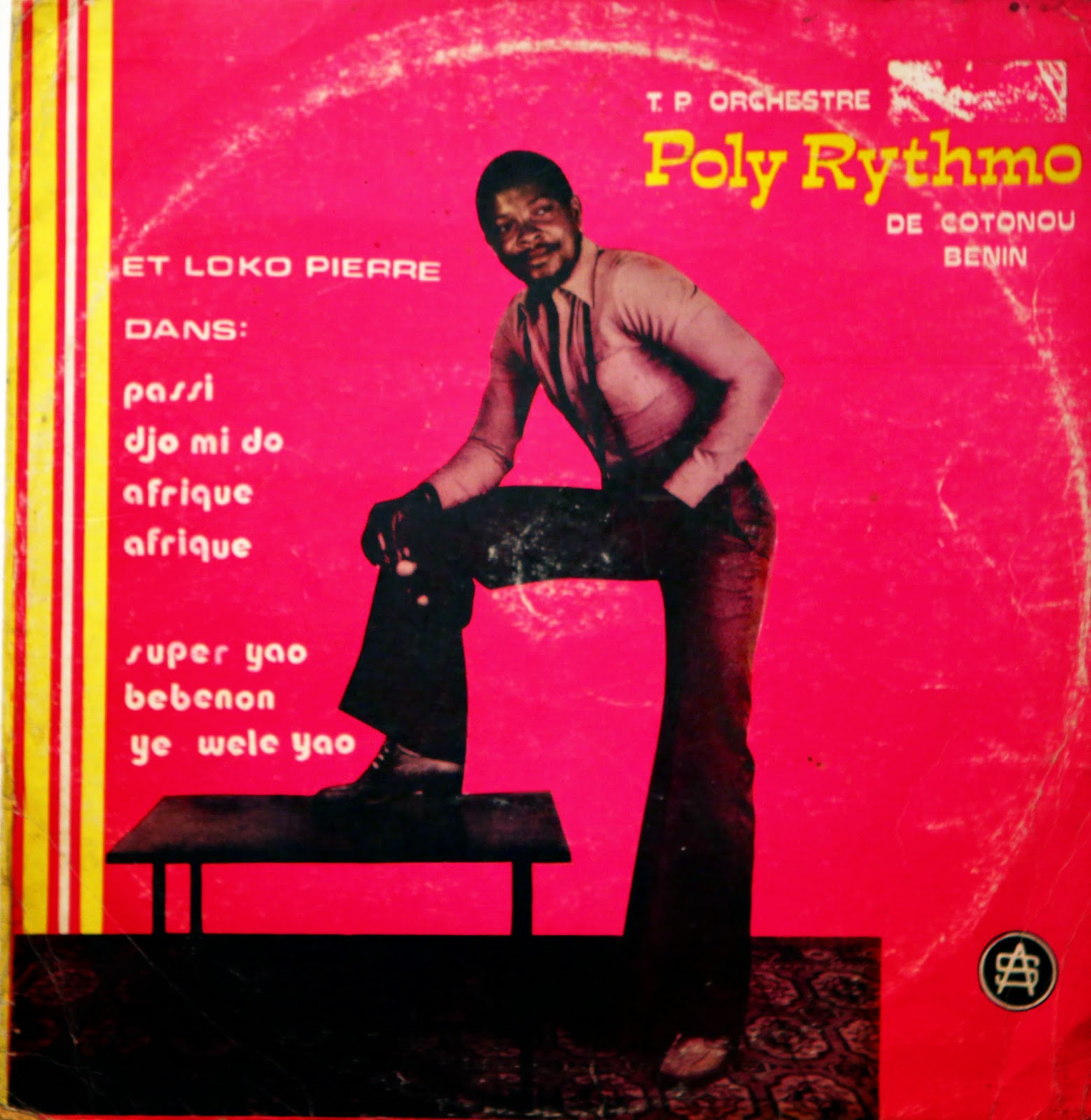
This album was composed by the saxophonist player of the band, Loko Pierre. It was edited on Albarika Store label in 1978. I particulary enjoy the beautiful gazzo rhyhtm tune "Super Yao Bebenon" sung by a super Eskill Lohento.
Cet album a été composé par le saxophniste du groupe, Pierre Loko. Il a été édité sur le label Albarika en 1978. J'aime particulièrement le rythme gazzo du titre "Super Yao Bebenon" chanté par un super Eskill Lohento.

Sam Fan Thomas & Orchestre Black Santiago (Cameroon/1978)
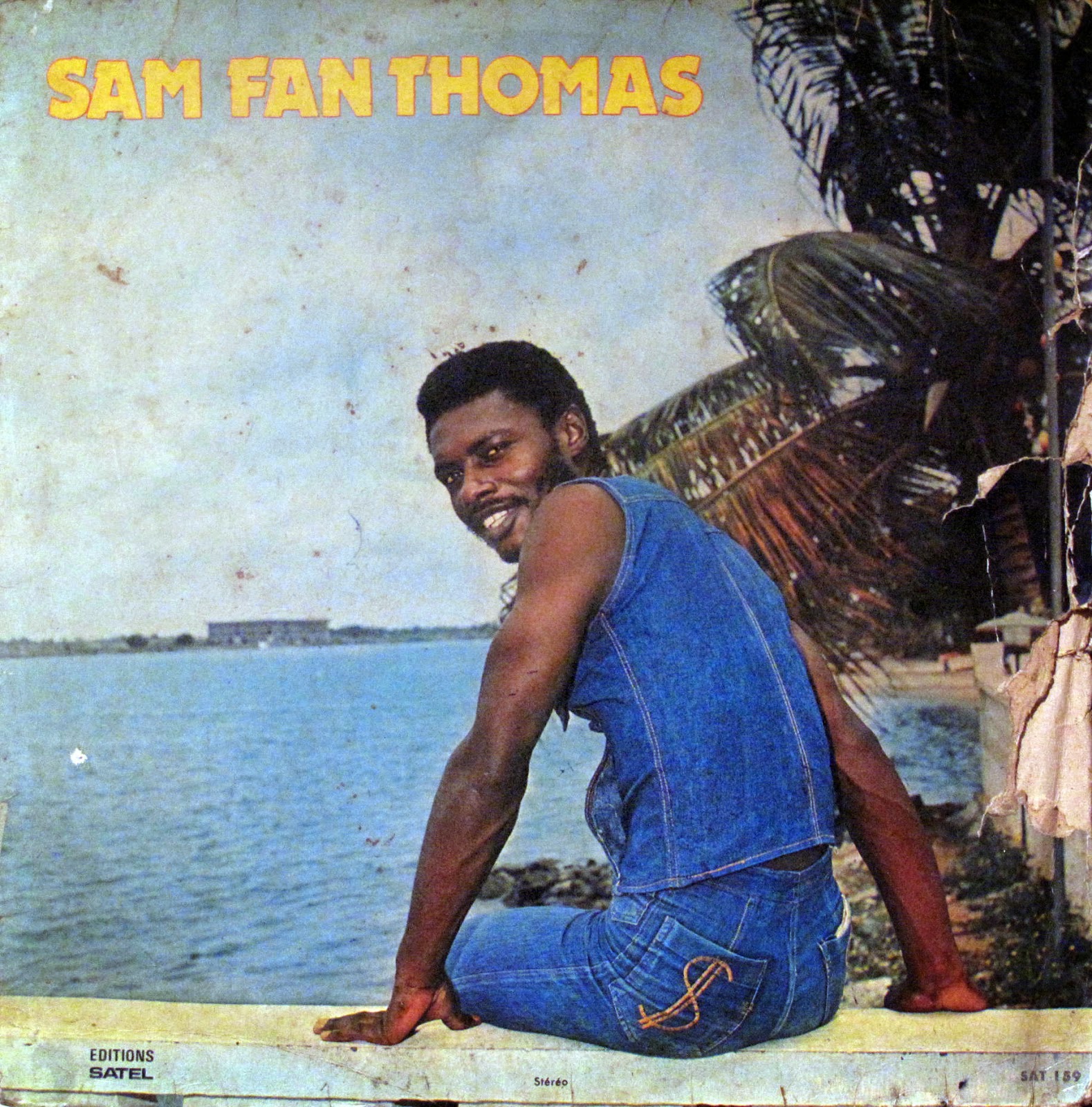
Sam Fan Thomas is a cameroonian musician associated with Makossa rhythm. He began his career during the late 60's and knew his first hit with "Rikiatou". Then his "African Typic collection" would be an international hit in 1984. Perhaps his best known album. This older one was recorded in Benin in 1978 with the Black Santiago's. Very original album.
Sam Fan Thomas est un artitse camerounais associé au rythme makossa. Il commence sa carrière durant les années 60s et connait son premier succès avec le morceau "Rikiatou". Puis son "African Typic Collection" sera une tube international en 1984. Surement son album le plus connu. Celui-ci, plus ancien, a été enregistré au Bénin avec l'orchestre Black Santiago en 1978. Album très original.

Youssou N'Dour et Le Super Etoile de Dakar (Senegal/1983)

In 1979, he formed his own ensemble, the Etoile de Dakar. His early work with the group, in the Latin style, was popular all over Africa during that time.
In the 1980s, he developed a unique sound with his ultimate group, Super Étoile de Dakar featuring Jimi M'Baye on guitar, bassist Habib faye, and Tama (talking drum) player Assane Thiam.


T.P. Orchestre Poly-Rythmo & Vicky Amenoudji (1978)

Poly-Rythmo's record sung and composed by Vicky Amenoudji in 1978.
45 tours du Poly-Rythmo chanté et composé par Vicky Amenoudji en 1978.

Gnonnas Pedro & His Dadjes Band (1979)

Gnonnas Pedro was also an actor of the "afrobeat" movement. Recorded in 1979 this agbadja modern rhythm single is, through its lyrics, a support of General Mathieu Kerekou's politic (back cover's picture) which was influensed by communism and make Dahomey become, in 1972, the Popular Republic of Benin.
Gnonnas Pedro fut aussi un vibrant acteur du mouvement "afrobeat". Enregistré en 1979 ce single de rythme agbadja moderne rend un hommage appuyé au Général Mathieu Kerekou (voir dos de la pochette) qui transforma le Dahomey en République Populaire du Bénin c’est à dire une république marxiste.

Sunny Black's Band (1968)

Sunny Black's band became Poly-Rythmo in 1969. This record must have bee recorded in 1968. Clément Mélomé comosed and sung.
Sunny Black's Band est devenu l'orchestre Poly-Rythmo en 1969. Je pense que ce disque a été enregistré en 1968. Clément Mélomé chante et compose.
Anniversary Post: ALBARIKA & ADJAHOUI: 001

This is the first production and recording, in 1969, from Albarkia Store and Yedenou Adjahoui. As always Adjahoui sings in Goun, a language from the Goun people of Porto Novo. But he also sings, on face B, in Mina, from the ouest of Benin, in Aneho. Many traditional singers were singing in different languages that's how Adjahoui become so popular...
The Picture has been taken in 1969 by Gilbert Rouget, the famous musicologist who recorded many ceremonies. The girl is a Vodoun adept of Dikwin, a rare Vodoun from Goun People.
I never saw them during my shootings in Porto-Novo.

Amadou Ballake (Burkina Faso/1980)

I Particulary like this rare single from Amadou Ballaké recorded in 1980. To describe this recording let's read worldservice description:
One of the great things about Ballaké is his diversity and his capacity to shine in any musical style. While SCD 68 contains Mandé (malinke, mandingo etc.) style songs, SCD 69 has two tracks in a very different, probably Mossi style. The song "Warba" always conjures up images of people walking backwards, while "Liguiry" evokes the contrary: a feeling of running (too) fast down a hill....

Gnonnas Pedro & His Dadjes Band Vol.4 (1978)

Rare 1978's recording from Gnonnas Pedro and His Dadjes. This 4th volume contains famous french Charles Aznavour's hit "Bon Anniversaire". Gnonnas Pedro used to be the only singer authorized by Aznavour to interpret his repertory.
Album rare de Gnonnas Pedro et Ses Dadjes enregisté en 1978. Ce volume 4 contient le fameux morceau de Charles Aznavour: "Bon Anniversaire". Gnonnas était le seul artiste authorisé par Aznavour lui-même à interprété son répertoire.

Sonny Okosun: "Holy Wars" (Nigeria/1978)

In 1976, Okosun created Ozziddi band (Ozziddi means message) channeling influenses like afro-funk, soul and reggae. About this period, Okosun said: "I was trying to talk about what was happening to black people." This second album with Ozziddi was recorded in London in 1978.
En 1976, Okosun crée l'orchestre Ozziddi qui veut dire "message", mélangeant des influenses telles que l'afro funk, la soul et le reggae. A propos de cette période, Okosun dit: "J’essayais de parler de ce qui arrivait au peuple noir". Ce deuxième album avec Ozziddi a été enregistré en 1978 à Londres.

Orchestre Black Santiago & Ignace de Souza (1977)

Album composed by Ignace de Souza and recorded in Ivory Coast on Badmos label.
Album composé par Ignace de Souza et enregistré en Côte d'Ivoire en 1977 sur le label Badmos.


Honore Avolonto & l'Orchestre Black Santiago (1979)

Anthological album of Avolonto Honoré backed by the Black Santiago's. Recorded in 1979 Avolonto composed the music and the lyrics. This album is famous because of afrobeat tune "Assougnon Dje Dokoli".

Subscribe to:
Posts (Atom)